
밀라노 서부의 르네상스 접합부
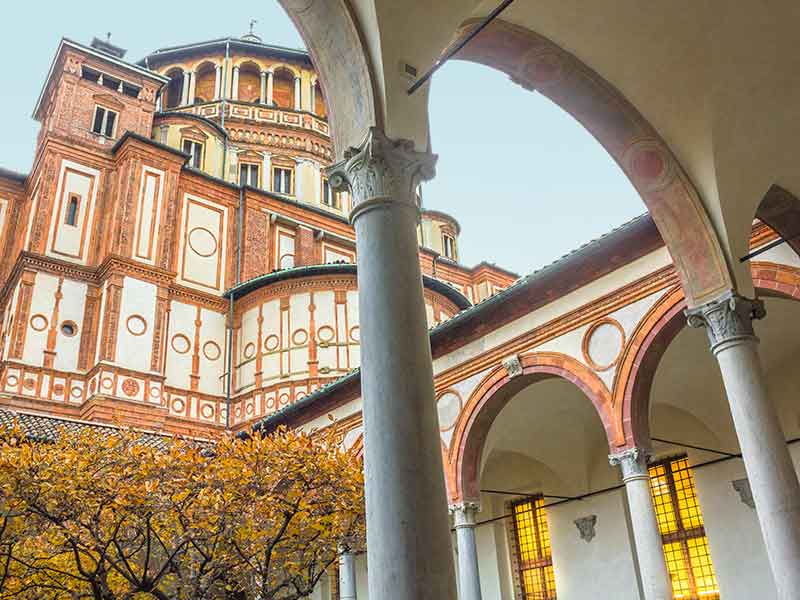
Santa Maria delle Grazie는 레오나르도 다 빈치의 프레스코 옆 건물 그 이상입니다. Guiniforte Solari의 벽돌 교회와 회랑(1460년대)은 세련된 후기 고딕 롬바르디아 양식을 그대로 보여 주고, Donato Bramante의 반구형 튜리브나(1490년대)는 로마식 중앙 집합식 평면과 알베르티적 명료함을 불러옵니다. 돔 아래에 서면 왜 건축가들이 이곳을 순례하듯 찾아오는지 실감할 수 있습니다.
1980년부터 교회와 Cenacolo는 유럽 미술의 방향을 바꾼 「탁월한 창조적 성취」로 유네스코에 함께 등재되어 있습니다. 식당(레페토리움)에 들어가지 않더라도 성당은 천천히 둘러보기에 충분히 보람 있습니다.
예배 공간: 운영 시간 내 무료, 단정한 복장. 레오나르도의 그림: 별도 박물관 티켓, 예약 필수, 다른 출입구와 보안 줄. 중앙 복도에서는 벽화를 볼 수 없습니다.
역사 개요
도미니코회의 기반(1463–1469)
1463년 가스파레 비메르카티(Gaspare Vimercati) 백작이 수도사들에게 Santa Maria delle Grazie에 바쳐진 작은 예배당이 있던 토지를 기증했습니다. Solari는 테라코타 장식과 교차 리브 천장을 갖춘 삼란식 홀 교회를 세웠습니다—전형적이면서도 정제되어 있고, 정신적으로는 여전히 중세에 가깝습니다.
Bramante의 개입(1492–1497)
Ludovico Sforza는 이 단지를 왕조 묘소로 바꾸려 했습니다. Bramante는 기존 후면 제단부를 거대한 반구로 덮인 정육면체로 바꾸고, 보조 후면 제단부와 성물실 동선을 배치했습니다. 빛은 높은 루네트로 쏟아지고, 탬버(드럼) 외벽은 테라코타 보석함처럼 보입니다.
- 돔: 지름 약 20m, 아케이드 회랑과 필라스터 리듬
- 북(드럼) / 티부리오(Tiburio): 벽돌 무늬가 풍부한 다각형 조적
- 후면 제단부: 반원형, 창이 뚫려 음향적으로도 살아 있습니다
- 회랑: Bramante가 가느다란 기둥 위 아케이드로 다듬음—도시 소음에 대한 고요한 대위
벽돌 외피는 이어지는데 내부 공간은 고딕 리브에서 르네산스 부피로 도약한다는 점을 눈여겨보세요. Bramante는 Solari의 껍질을 지우지 않고 존중했습니다—시대 간 초기 대화입니다.
이후 세기와 전쟁의 상처
나폴레옹 시대의 수도원 폐지로 수도원 대부분은 비었고, 예배는 교회에서 이어졌습니다. 1943년 8월 15일 연합군 폭격으로 식당 지붕이 무너졌고, 모래주머니와 행운이 레오나르도의 벽을 지켰습니다. 교회는 복구되었고 벽화는 수십 년에 걸쳐 안정화되었습니다—오늘 방문객은 트라우마와 보살핌을 함께 보게 됩니다.
볼거리
외부
- 정면: 르네상스 양식 포털을 댄 롬바르디아 고딕 벽돌
- 티부리오: 광장에서 찍는 탬버와 돔 실루엣
- Chiostro delle Rane: 분수에서 붙은 별명; Bramante 기하학을 보기 좋은 각도
내부
- 중앙 복도 천장: 프레스코 마감 칸, 조각된 주두
- Bramante 튜리브나: 빛이 차오르는 공간적 클라이맥스
- 측면 예배당: 15~17세기 롬바르디아 화가들
- Madonna delle Grazie 예배당: 이곳 민간 신앙과 맞닿은 서원 화
- 구 성물실: Bramante의 계획, 역사적 목재 설비
수도원 공간
- 식당(레페토리움): 박물관 구역—티켓 필요
- 회랑: corso Magenta와 기도 사이의 고요한 통로
- 도서관: 사본; 일반 관광으로는 드물게 공개
벽 너머의 레오나르도
대략 1494~1498년 사이 레오나르도는 수도원을 둘째 작업실처럼 썼습니다. 기록에는 비계에 오르는 새벽 작업, 붓을 대지 않고 멍하니 보는 날들, 속도를 두고 수도원장과 벌인 논쟁이 등장합니다—레오나르도는 그리스도와 가룟 유다에 어울릴 얼굴을 아직 찾고 있다고 주장했습니다.
그는 습식 프레스코 대신 건식 세코(secco)에 유화·템페라 실험을 섞어 느린 입체 표현을 얻으려 했습니다—뉘앙스에는 탁월하지만 습한 밀라노에서 부착력에는 치명적이었습니다. 오늘 읽는 보존 관련 헤드라인 뒤에는 이 긴장이 있습니다.
교회 개방 시간(예배 일정)
활동하는 본당이라 시간은 전례를 따르며, 관광객은 중앙 복도를 기도와 나눕니다.
| 요일 | 오전 | 오후 / 저녁 |
|---|---|---|
| 월–토 | 7:00–12:00 | 15:00–19:00 |
| 일요일 및 축일 | 7:30–12:30 | 15:30–21:00 |
미사 중에는 관람이 잠시 중단될 수 있습니다—성당 뒤로 물러서거나 축복 후 다시 오십시오.
교회 + Cenacolo 함께 보기
방법 A – 자유 관람
- 식당(레페토리움) 시간대는 몇 주 전 예약
- 45~60분 일찍 도착
- 교회는 무료로 관람
- 예약 시각 30분 전에 박물관 줄에 합류
방법 B – 해설 콤보
업체는 두 공간을 하나의 시간축으로 묶어 해설합니다—Bramante와 레오나르도를 단일 Sforza 프로젝트로 이해하고 싶을 때 유용합니다.
콤보 상품 둘러보기밀라노에서 더 보는 Bramante
- Santa Maria presso San Satiro: 원근으로 만든 가짜 후면 제단부—압축된 도심 속 건축적 재치
- Sant’Ambrogio 교구장: 옛 베네딕트회 구역의 회랑
- Santa Maria della Passione: 그의 권속과 연관된 팔각 돔
에티켓
- 복장: 어깨와 무릎 가리기
- 목소리: 낮게; 박물관 로비가 아닙니다
- 사진: 대개 플래시 없이 가능—전례당원 안내를 따르세요
- 동선: 계단 없는 경로가 있음; 경사로가 필요하면 직원에게 문의
교회 무료 입장이 레오나르도 관람을 뜻하지는 않습니다. 티켓 없이는 식당(레페토리움)에 들어갈 수 없으며, 중앙 복도에서 벽화를 엿보는 지름길은 없습니다.
자주 묻는 질문
아니요. 벽화는 구 식당(레페토리움)에 있으며, 별도 박물관 출입구·티켓·에어록(전실) 체계가 있습니다.
없습니다—공지된 시간에는 예배 공간으로 자유롭게 들어갈 수 있습니다.
내부 30~45분; 회랑을 걷고 탬버를 촬영하면 15분을 더 잡으세요.
핵심 교회: Guiniforte Solari(1463–1469). 튜리브나와 돔: Ludovico il Moro 치하에서 Donato Bramante(1492년부터).