
Ένα «αρθρωτό σημείο» της Αναγέννησης στη δυτική πλευρά του Μιλάνου
Η Santa Maria delle Grazie είναι κάτι παραπάνω από το κτίριο δίπλα στην τοιχογραφία του Λεονάρντο. Ο τούβλινος ναός και ο περίκλειστος διάδρομος του Γκινιφόρτε Σολάρι (1460) μιλούν ευφραδώς όψιμο γοτθικό Λομβαρδικό· η ημισφαιρική τρίμπουνα του Ντονάτο Μπραμάντε (1490) εισάγει κεντρικό ρωμαϊκό σχεδιασμό και αλβερτική καθαρότητα. Κάτω από τον τύμπανο ακόμη νιώθει κανείς γιατί οι αρχιτέκτονες κάνουν «προσκύνημα» εδώ.
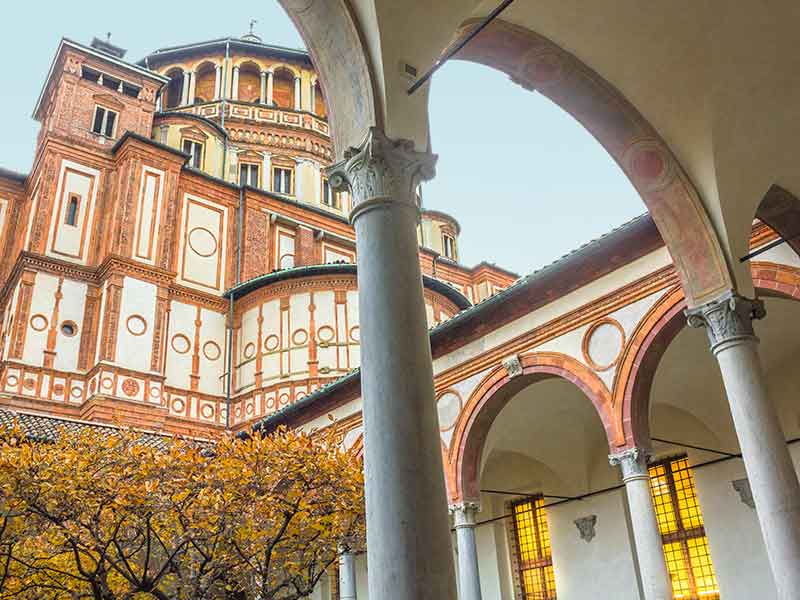
Από το 1980 ο ναός και το Τσενάκολο μοιράζονται τη διάκριση UNESCO ως «εξαιρετικό δημιουργικό έργο» που ανακατεύθυνε την ευρωπαϊκή τέχνη. Ακόμη κι αν δεν μπείτε ποτέ στην τραπεζαρία, η βασιλική αξίζει αργή, προσεκτική θέαση.
Χώρος λατρείας: δωρεάν τις ώρες λειτουργίας, σωστή ενδυμασία. Το έργο του Λεονάρντο: ξεχωριστό εισιτήριο μουσείου, υποχρεωτική κράτηση, άλλη είσοδος και γραμμή ασφαλείας. Από το κλίτος δεν φαίνεται η τοιχογραφία.
Ιστορικό σκαρίφημα
Δομινικανικά ξεκινήματα (1463–1469)
Το 1463 ο κόμης Γκασπάρε Βιμερκάτι χάρισε στους μοναχούς οικόπεδο με μικρό παρεκκλήσι της Santa Maria delle Grazie. Ο Σολάρι ανήγειρε τρίκλιτη αίθουσα-ναό με κεραμικό διάκοσμο και σταυροθόλια — τυπικό, εκλεπτυσμένο, ακόμη μεσαιωνικό στο πνεύμα.
Η επέμβαση του Μπραμάντε (1492–1497)
Ο Λουδοβίκος Σφόρτσα ήθελε το συγκρότημα δυναστικό τάφο. Ο Μπραμάντε αντικατέστησε την παλαιότερη αψίδα με κύβο στεφανωμένο από ευρύ ημισφαίριο, με πλαϊνές αψίδες και ακολουθία ιερού. Το φως πέφτει από ψηλά φεγγίτα· εξωτερικά ο τύμπανος μοιάζει με κουτί κοσμημάτων από τερακότα.
- Τρούλος: διάμετρος περίπου 20 μ, στοά και ρυθμός πιλάστρων
- Τύμπανος / τιμπόριο: πολυγωνική τοιχοδομία με πλούσιο τούβλινο μοτίβο
- Αψίδες: ημικυκλικές, ανοιγμένες σε παράθυρα, ζωντανά ακουστικά
- Περίκλειστος διάδρομος: ο Μπραμάντε διαμόρφωσε αψιδώματα σε λεπτούς κίονες — ήρεμο αντίβαρο στον θόρυβο του δρόμου
Προσέξτε πώς οι τούβλινες «φλοιοί» παραμένουν συνεχείς ενώ ο εσωτερικός χώρος πηδά από γοτθική καμάρα σε όγκο Αναγέννησης. Ο Μπραμάντε δεν έσβησε τον φάκελο του Σολάρι — ένας πρώιμος διάλογος εποχών.
Μετέπειτα αιώνες και πόλεμος
Η ναπολεόντεια εκκοσμίκευση άδειασε μεγάλα κομμάτια του μοναστηριού· η λειτουργία συνεχίστηκε στον ναό. Στις 15 Αυγούστου 1943 αεροπορικές βόμβες τίναξαν τη στέγη της τραπεζαρίας· σακιά με άμμο και τύχη κράτησαν τον τοίχο του Λεονάρντο. Ο ναός επισκευάστηκε, η τοιχογραφία σταθεροποιήθηκε επί δεκαετίες — σήμερα ο επισκέπτης βλέπει και τραύμα και φροντίδα.
Τι να δείτε
Εξωτερικά
- Πρόσοψη: λομβαρδική γοτθική τούβλο με αναγεννησιακή πύλη
- Τιμπόριο: η σιλουέτα τύμπανου-τρούλου από την πλατεία
- Chiostro delle Rane: παρατσούκλι από την κρήνη· καλύτερη γωνία για τη γεωμετρία του Μπραμάντε
Εσωτερικά
- Θόλοι κλίτους: ζωγραφισμένα διαστήματα, σκαλισμένα κιονόκρανα
- Τρίμπουνα Μπραμάντε: το φωτεινό χωρικό αποκορύφωμα
- Πλευρικά παρεκκλήσια: λομβαρδοί ζωγράφοι 15ος–17ος αι.
- Παρεκκλήσιο της Madonna delle Grazie: αναθηματική εικόνα, ριζωμένη στη λαϊκή ευλάβεια
- Παλιά ιερά σκευοφυλάκια: σχεδιασμός Μπραμάντε, ιστορική ξυλοδουλειά
Χώροι μονής
- Τραπεζαρία: ζώνη μουσείου — μόνο με εισιτήριο
- Περίκλειστος διάδρομος: ήσυχη διάβαση μεταξύ Corso Magenta και προσευχής
- Βιβλιοθήκη: χειρόγραφα· σπάνια ανοιχτή σε απότομους τουρίστες
Ο Λεονάρντο πέρα από τον τοίχο
Μεταξύ περίπου 1494 και 1498 ο Λεονάρντο χρησιμοποίησε τη μονή σαν δεύτερο εργαστήρι. Οι πηγές περιγράφουν ξεκινήματα με την αυγή στο ικρίωμα, μέρες κοιτάζοντας χωρίς πινέλο και τσακωμούς με τον ηγούμενο για τον ρυθμό — επέμενε πως ακόμη έψαχνε πρόσωπα άξια για τον Χριστό και τον Ιούδα.
Ζωγράφισε σε ξηρό σέκκο με πειράματα λαδιού-τέμπερας για αργό μοντέλαρισμα — λαμπρό για τις αποχρώσεις, καταστροφικό για την πρόσφυση στην υγρή ατμόσφαιρα του Μιλάνου. Αυτή η ένταση κρύβεται πίσω από κάθε σημερινό τίτλο αποκατάστασης.
Ώρες λειτουργίας ναού (λειτουργικό πρόγραμμα)
Ενεργή ενορία: οι ώρες ακολουθούν τη λειτουργία· οι τουρίστες μοιράζονται το κλίτος με την προσευχή.
| Ημέρα | Πρωί | Απόγευμα / βράδυ |
|---|---|---|
| Δευ–Σάβ | 7:00–12:00 | 15:00–19:00 |
| Κυριακή & εορτές | 7:30–12:30 | 15:30–21:00 |
Κατά τη Θεία Λειτουργία η επίσκεψη μπορεί να διακοπεί — αποσυρθείτε στο τέλος του κλίτους ή επιστρέψτε μετά την ευλογία.
Συνδυασμός ναού + Τσενάκολο
Επιλογή Α — αυτοδιάθετα
- Κλείστε ραντεβού τραπεζαρίας εβδομάδες νωρίτερα
- Φτάστε 45–60 λεπτά νωρίτερα
- Επισκεφτείτε τον ναό χωρίς χρέωση
- Σταθείτε στη σειρά του μουσείου τριάντα λεπτά πριν το ραντεβού σας
Επιλογή Β — ξεναγημένος συνδυασμός
Οι πάροχοι ενώνουν ερμηνεία και στους δύο χώρους σε μία χρονοσειρά — χρήσιμο αν θέλετε τον Μπραμάντε και τον Λεονάρντο εξηγημένους ως ένα έργο Σφόρτσα.
Αναζήτηση συνδυαστικών προσφορώνΠερισσότερος Μπραμάντε στο Μιλάνο
- Santa Maria presso San Satiro: «ψεύτικη» αψίδα σε προοπτική — αρχιτεκτονικό αστείο σε στενό αστικό χώρο
- Κανονικό της Sant’Ambrogio: περίκλειστοι διάδρομοι του παλιού βενεδικτινικού περιβόλου
- Santa Maria della Passione: οκταγωνικός τρούλος στο περιβάλλον του κύκλου του
Κανόνες συμπεριφοράς
- Ενδυμασία: καλυμμένοι ώμοι και γόνατα
- Φωνή: χαμηλή· δεν είναι προθάλαμος μουσείου
- Φωτογραφίες: συνήθως χωρίς φλας — ακολουθήστε τις ενδείξεις του νεωκόρου
- Πρόσβαση: υπάρχουν διαδρομές χωρίς σκαλιά· ρωτήστε το προσωπικό για ράμπα
Η δωρεάν είσοδος στον ναό δεν σημαίνει πρόσβαση στον Λεονάρντο. Χωρίς εισιτήριο, όχι τραπεζαρία — δεν υπάρχει οπτικό «κόλπο» από το κλίτος.
Συχνές ερωτήσεις
Όχι. Η τοιχογραφία βρίσκεται στην παλιά τραπεζαρία, με ξεχωριστή είσοδο μουσείου, δικό της εισιτήριο και «αεροστεγή» διάβαση.
Όχι — ο χώρος λατρείας είναι ελεύθερος τις δημοσιευμένες ώρες.
Τριάντα ως σαράντα πέντε λεπτά μέσα· συν δεκαπέντε αν περπατήσετε τον περίκλειστο διάδρομο και φωτογραφίσετε τον τύμπανο.
Πυρήνας ναού: Γκινιφόρτε Σολάρι (1463–1469). Τρίμπουνα και τρούλος: Ντονάτο Μπραμάντε (από το 1492) για λογαριασμό του Λουδοβοίκου του Μαύρου.